

By Artem Ermakov, Owner and Operator of Island Window Cleaning Service, a family owned company serving South Florida. Updated October 2026.
Glass restoration in Florida: Boca Raton · Delray Beach · Palm Beach · Jupiter · Fort Lauderdale
The short answer: sometimes. Light surface scratches and haze can often be polished out. Deep scratches are different: removing them means grinding away the glass around them, which can distort the view, so they are often improved but not made invisible, and some are best handled by replacing the glass.
How Deep Is the Scratch? The Fingernail Test
Everything depends on depth. Run a fingernail across the scratch, moving across the line rather than along it. If your nail does not catch, the scratch is shallow and has the best chance of being polished out. If your nail catches in the groove, the scratch is deeper, and a professional should assess it before anyone starts grinding.
| Scratch type | How it feels | Can it be repaired? |
|---|---|---|
| Haze or fine cleaning marks | Nail does not catch | Usually yes, with glass polishing |
| Light scratch | Barely catches | Often yes, with stepped polishing |
| Moderate scratch | Nail catches slightly | Can be reduced a lot, but the repaired area must be blended |
| Deep scratch or gouge | Nail catches clearly | Often improved but not removed, and may distort the view |
| Crack or chip | Visible break | Usually replacement. See the glass repair process |
How Scratches Are Removed From Glass
Glass scratch removal is a controlled polishing process, not a quick buff.
- Assess. The technician checks the type of glass, the depth of the scratch and where it is, then tests a small area.
- Clean. Dirt and grit are removed first, because anything left on the glass can cause new scratches.
- Polish. A polishing compound, commonly cerium oxide, is worked with a felt pad and a rotary tool. The glass is kept wet and cool, since overheating can crack it.
- Step down. For deeper scratches, finer and finer abrasives gradually level the surface.
- Finish and inspect. The area is cleaned and checked from several angles and in different light.
The aim is to take off just enough glass to make the scratch disappear while keeping the surface flat. Our article on whether scratches can be buffed out explains the technique in more detail.
What Can Be Repaired
- Light cleaning scratches and haze: often removable with glass polishing.
- Moderate scratches: may be reduced a great deal with patient, stepped polishing.
- Interior and exterior glass: both can be repaired. The method is similar, but outside glass is exposed to dirt and weather, so it needs a good cleaning first.
- Stains and mineral buildup on top of scratches: sometimes what looks like a scratch is a stain. See what causes hard water stains.
What Is Hard or Impossible to Fix
- Deep scratches and gouges. Removing them can leave a dip or wavy reflection.
- Coated glass, such as low-E. Polishing can remove or damage the coating, so ask first.
- Tempered, laminated and impact-rated glass. These allow only light polishing, and a professional should judge what is safe. Impact windows are common in South Florida.
- Mirrors. If the scratch is in the reflective backing, polishing the front will not help.
- Cracks. A crack is a safety issue, and the pane usually needs replacing.
Where Scratches Happen in South Florida
- Sliding glass doors and lanai glass. Sand and grit from pool decks, patios and beaches get dragged across the glass during cleaning.
- Storm and construction areas. Wind-blown debris, stucco dust and paint overspray can scratch glass that is wiped dry.
- Shower doors. Abrasive pads and powders used on mineral stains are a common cause.
- Storefronts. Scraped stickers, signs and residue can mark glass.
- Balcony doors and glass railings. Salt, sand and rough cleaning leave fine marks over time.
Special Considerations by Glass Type
| Glass | What to know |
|---|---|
| Single-pane window | The easiest to repair. Mostly a matter of scratch depth. |
| Double-pane (insulated) | Polishing is possible on the outer surfaces. Be careful of seals and coatings. |
| Low-E coated | Coatings are thin and can be damaged by polishing. Ask a professional. |
| Tempered | Light polishing only. Deep grinding is not advised. |
| Laminated or impact-rated | Outer layer may be polished lightly. Inspect for chips and delamination. |
| Shower doors and glass railings | Often stains plus scratches. Professional assessment is wise. |
Why DIY Kits Can Make Things Worse
Store-bought kits and home remedies can leave a hazy, uneven patch that looks worse than the original scratch. Heat from a fast polishing wheel can also crack glass, and the wrong compound can create new scratches. Baking soda rarely works on real scratches, and cheap fixes often only fill them for a short time. For a visible window or door, it is safer to have a professional look at it first. Read whether cheap window fixes actually work.
What to Expect on Site
A typical visit starts with a look at the scratches in good light, the fingernail test and a conversation about what bothers you. The technician tests a small area, explains what is likely to improve and tells you if some marks will remain. Polishing is done wet, so there is slurry to contain and wipe up, and the area around the glass is protected. For more on that, see whether glass repair makes a mess.
Many people also ask whether glass repair weakens the glass. On a light scratch, the amount of glass removed is tiny. Deeper repairs remove more, which is another reason to get honest advice before you start. How long it takes depends on the size, the depth and how many scratches there are, and we give you an estimate on site.
Repair or Replace?
Restoration is usually more affordable than replacing a large pane and avoids the disruption of new glass, but it is not right for every scratch. Replacement may be the better answer if the scratch is deep and in your line of sight, if there is a crack, if the glass is coated in a way that polishing would ruin, or if the seal on a double-pane unit has failed. A good professional will tell you honestly when replacement is better.
Factors that affect cost include the size of the glass, the number and depth of scratches, the type of glass and how easy it is to reach. We give a free estimate so you can compare.
Common Myths and Quick Fixes
| Quick fix | Does it work? |
|---|---|
| Toothpaste | Too mild for real scratches. It may fill them briefly. |
| Baking soda paste | Rarely helps, and gritty paste can create fine new scratches. |
| Clear nail polish | Fills a scratch cosmetically, but it is visible and wears off. |
| WD-40 or oils | Can hide a scratch for a short time by filling it, but does not remove it and attracts dirt. |
| Metal polish, such as Brasso | Contains a mild abrasive. It may dull glass and damage coatings, so it is not recommended on visible glass. |
| Cerium oxide kit | The right idea, but results depend on skill, heat control and the type of glass. |
For more on this, read whether cheap window fixes actually work.
Questions to Ask a Glass Restoration Company
- Have you worked on my type of glass, such as tempered, laminated or low-E?
- Will you test a small area first?
- Will any scratch remain, and could the view look distorted?
- How will you protect the area and clean up?
- Can you give me an estimate before starting?
- Can I see photos of similar work?
A Real Example: Oceanfront Glass Restoration in Jupiter
This is a real project from our work in South Florida: an oceanfront home in Jupiter where the windows and French doors had become hazy and spotted. We masked the frames, polished the glass and finished with a thorough cleaning. The photos and clips below are from that job.
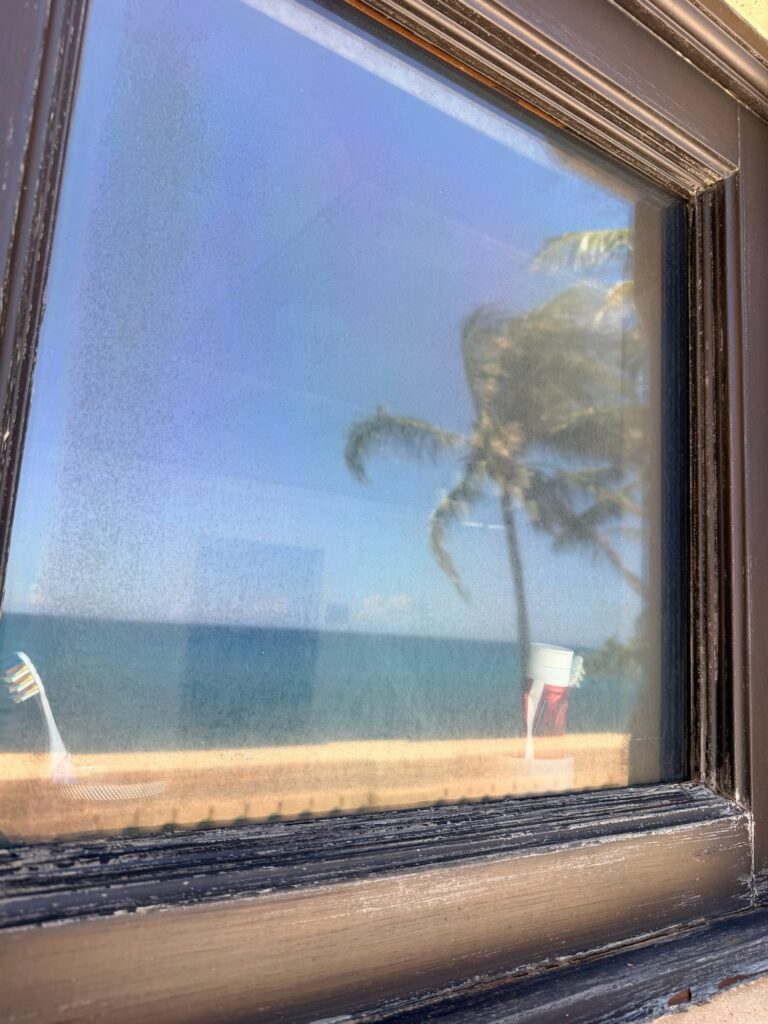
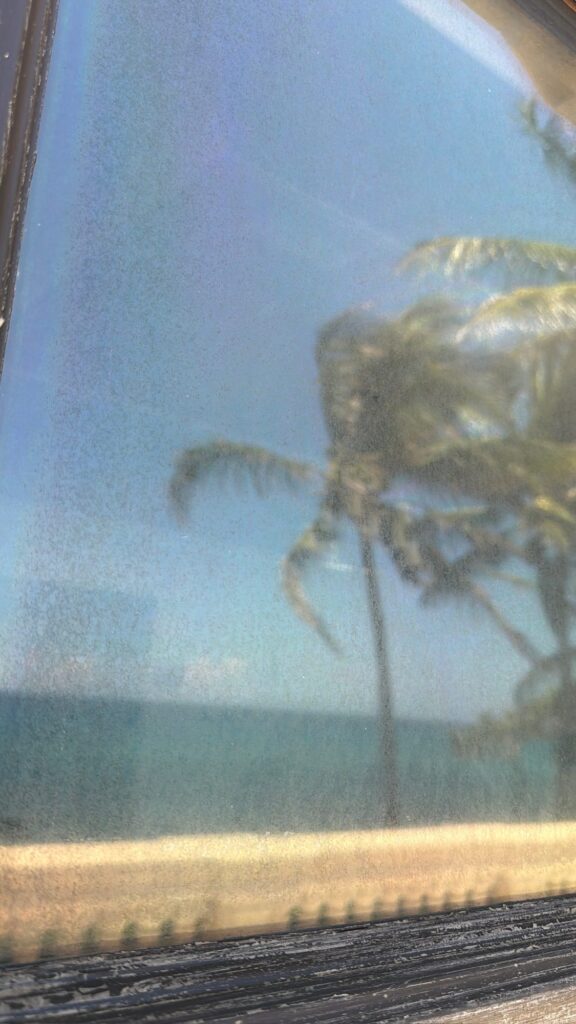
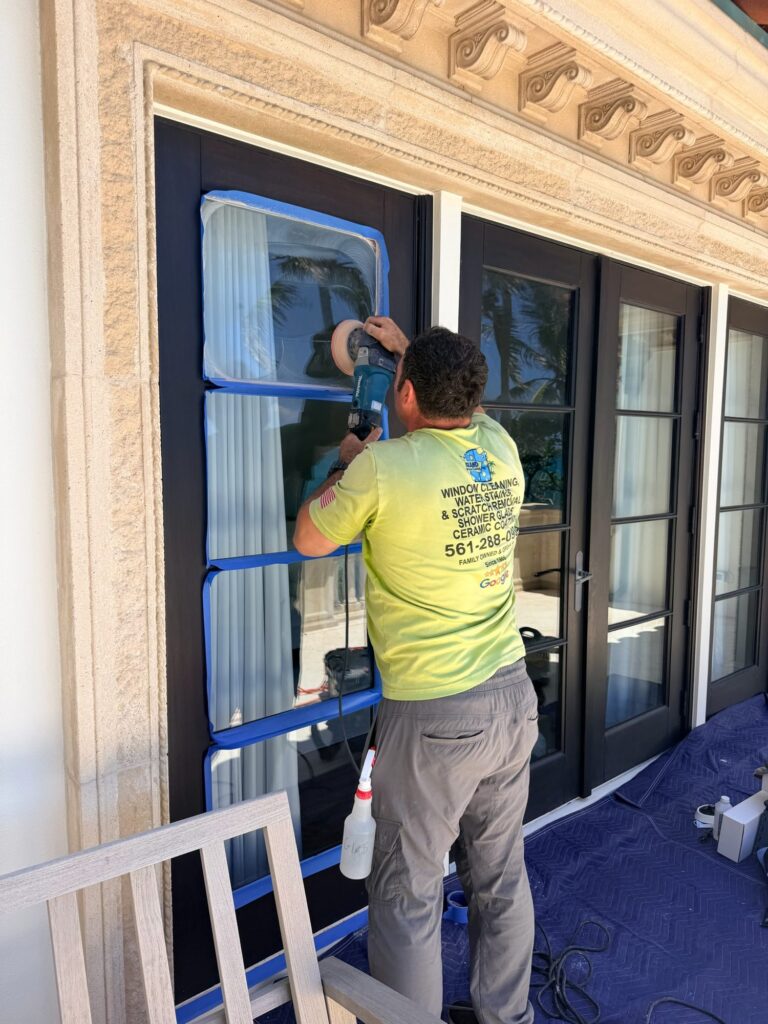

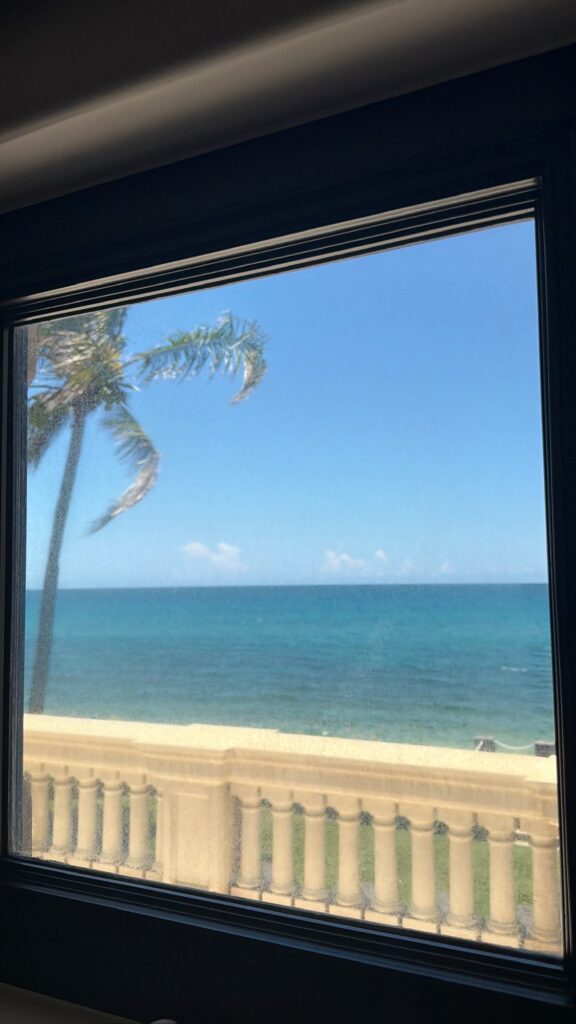
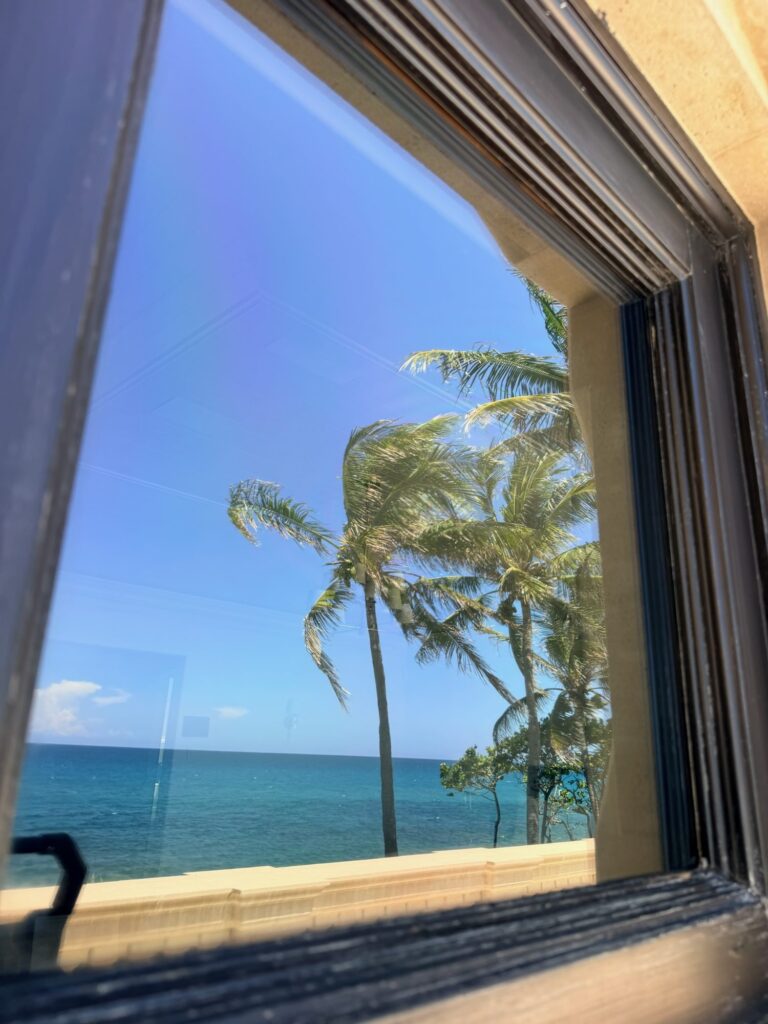
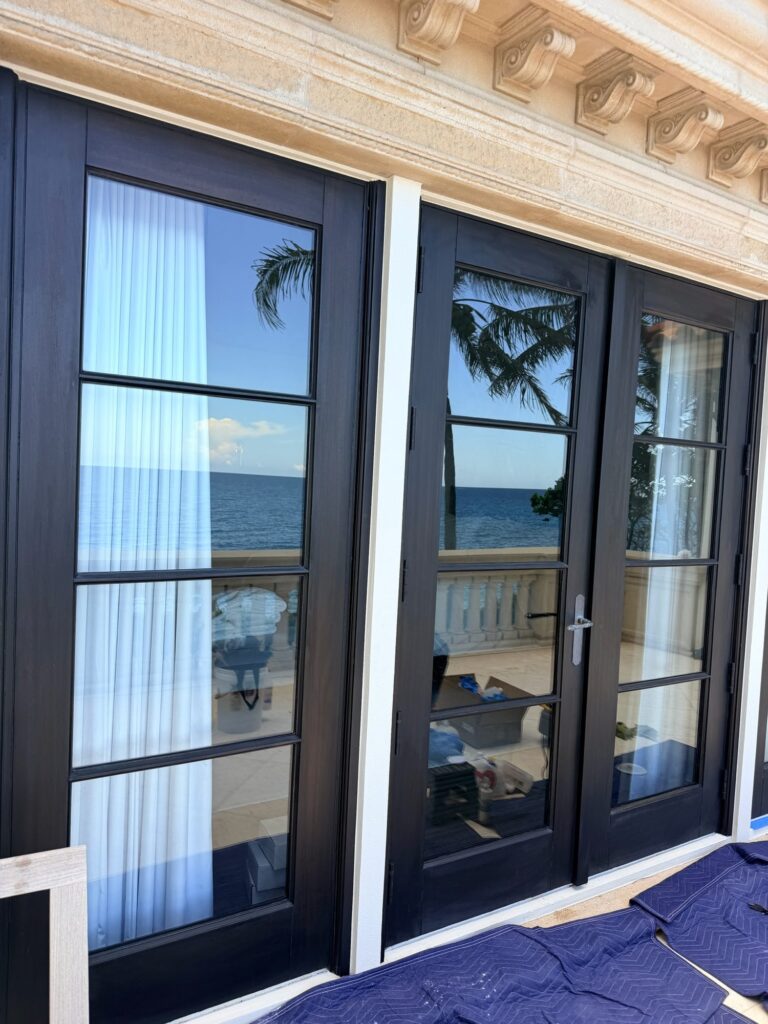
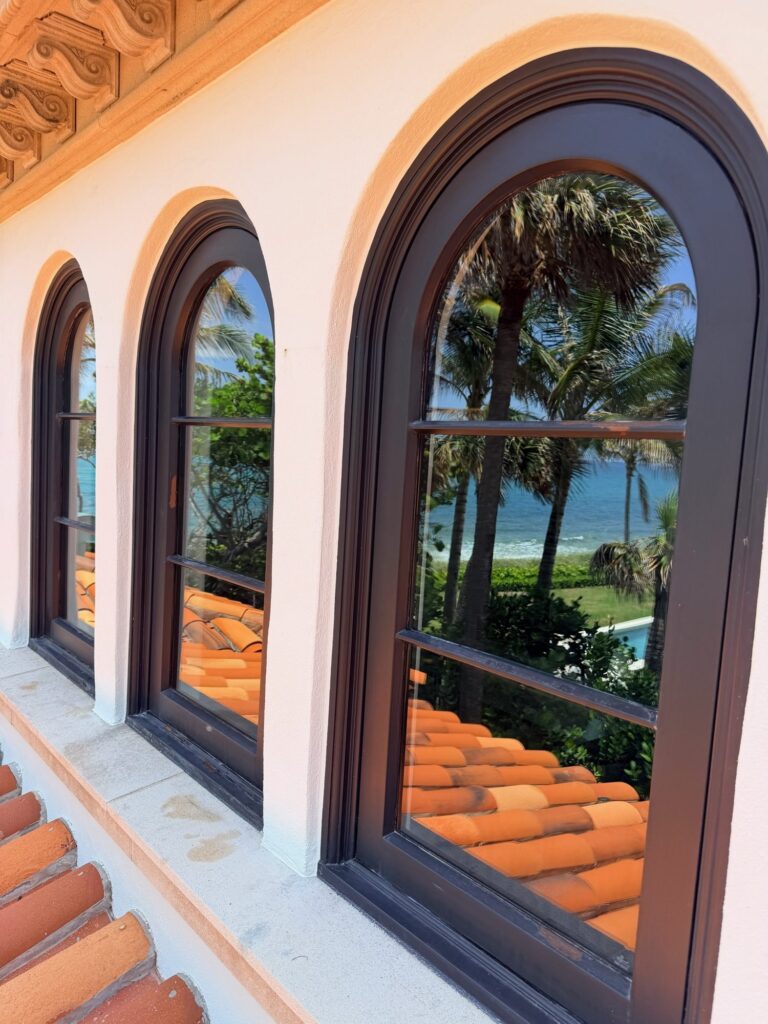
Results depend on the type of glass and the depth of the damage, which is why we always assess first. See our glass restoration page for Jupiter.
What Causes Scratches and How to Prevent Them
Most scratches come from grit trapped under a cloth or scraper, razor blades used on dirty glass, steel wool, abrasive cleaners and construction debris. In coastal Florida, wind-blown sand and storm debris add to the list. Read more in what causes scratches on window glass.
- Wet the glass and rinse off loose dirt before wiping.
- Use clean microfiber and a fresh squeegee blade.
- Use scrapers only on clean, wet glass.
- Cover windows during sanding, stucco or paint work.
- Avoid steel wool and abrasive powders anywhere near glass.
If you wonder whether a scratch will ever go away on its own, see are glass scratches permanent?
Frequently Asked Questions
Can scratches be buffed out of glass?
Light ones often can. See our guide to buffing scratches out of glass.
Is it cheaper to repair than replace glass?
Often, yes, but it depends on the size, depth and type of glass. We give a free estimate so you can compare.
Can interior and exterior glass scratches both be repaired?
Yes. The method is similar, but exterior glass must be cleaned very carefully first because of outdoor grit.
Does toothpaste remove scratches from glass?
Rarely. It is too mild to remove a real scratch, and it may only fill it for a short time.
Will polishing distort my window?
It can if too much glass is removed from one spot. That is why deep scratches need a careful assessment.
How do I know if my window can be repaired?
Check the depth with the fingernail test, then have a professional look at it. See how to know if your window is repairable.
Glass Restoration in Florida
We restore scratched and stained glass for homes and businesses across South Florida. Choose the nearest page: Boca Raton, Delray Beach, Palm Beach, Jupiter and Fort Lauderdale.
Talk to Island Window Cleaning Service
We can look at the scratches and tell you plainly what can be restored and what cannot. Call (561) 288-0904 for a free estimate, Monday through Saturday, 8am to 7pm.